 general
 How LLMs are Redefining Customer Support in Logistics
How Large Language Models are transforming customer support in logistics — scalability, multilingual support, and real-time responsiveness
++
In 2023, the logistics industry faces an unprecedented challenge: while shipment volumes have surged 127% since 2019, customer support teams have only grown by 15%. Leading companies like Maersk and DHL are turning to Large Language Models not just for efficiency, but for survival in an increasingly competitive market.
LLMs like GPT-4 are redefining customer support, offering intelligent, real-time assistance that scales with demand. For logistics companies aiming to stay ahead, integrating LLMs into customer support is a strategic imperative.

Key Statistics Highlights
127% increase in shipment volumes since 2019
Up to 35% reduction in customer support costs
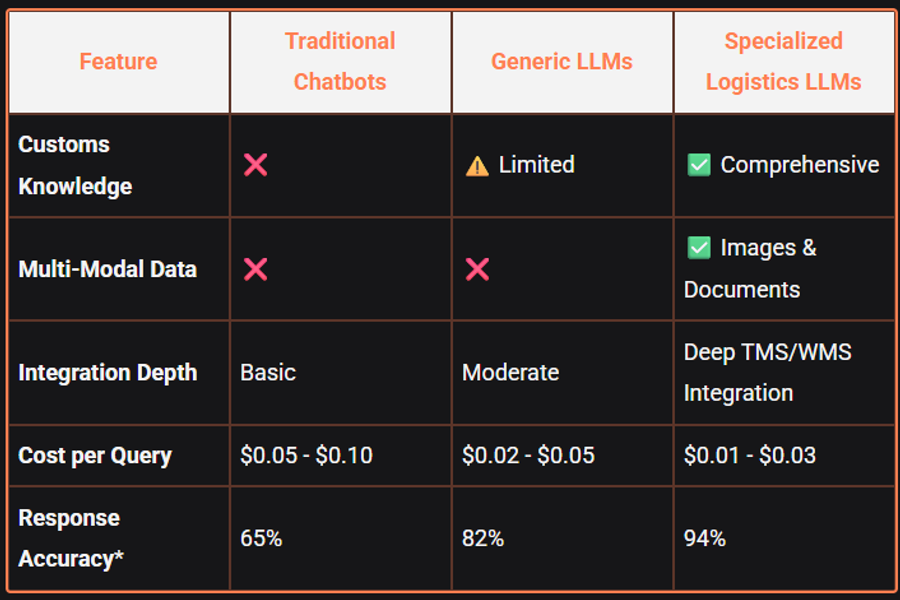
94% response accuracy with specialized logistics LLMs
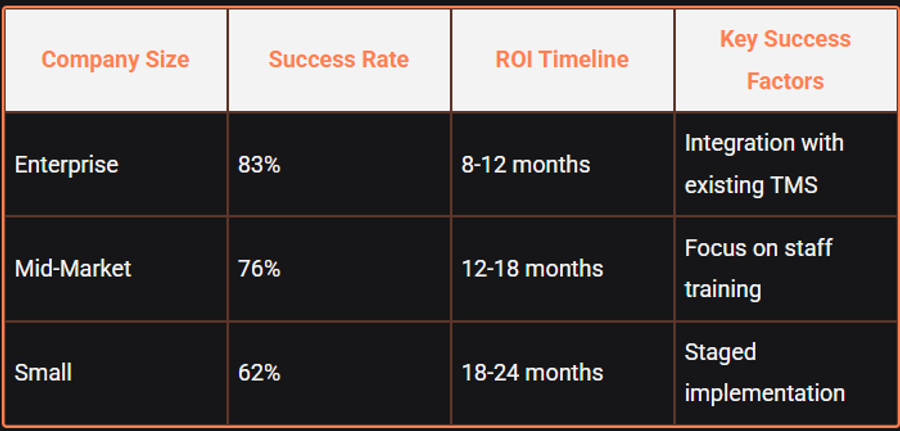
83% success rate for enterprises implementing LLMs
Average ROI achieved in 8-18 months
Current Challenges in Logistics Customer Support
Volume and Complexity of Inquiries
Surging Shipment Volumes: The e-commerce boom has led to a significant increase in shipments.
Complex Queries: Customers have detailed questions about customs regulations, international logistics, and supply chain disruptions.
Multi-Language Support Requirements
Global Operations: Supporting customers across continents requires multilingual capabilities.
Cultural Nuances: Understanding regional differences is crucial for effective communication.
Real-Time Tracking and Status Updates
Demand for Instant Information: Customers expect real-time updates on their shipments.
Integration Challenges: Providing accurate information requires seamless integration with tracking systems.
Cost and Scalability Issues
High Operational Costs: Staffing 24/7 support centers is expensive.
Scalability: Handling peak periods without compromising service quality is challenging.
Response Time Expectations
Immediate Gratification: 88% of customers expect a response within one hour (Forrester Research, 2023).
Competitive Pressure: Quick responses are necessary to maintain customer loyalty.
Understanding LLMs in Customer Support
Technical Explanation in Simple Terms
LLMs are advanced AI models trained on vast amounts of text data. They can:
Understand Complex Language: Interpret nuanced and detailed queries.
Generate Human-Like Responses: Provide relevant and context-aware answers.
Learn and Adapt: Improve over time through machine learning.
Key Capabilities and Advantages
24/7 Availability: Always-on support without human limitations.
Consistency: Deliver uniform responses across interactions.
Personalization: Tailor responses based on customer history.
Difference from Traditional Chatbots
Advanced Understanding: LLMs comprehend context better than rule-based chatbots.
Natural Conversations: Engage in dialogues that feel human-like.
Adaptive Learning: Learn from new interactions and data.
Real-World Applications Specific to Logistics
Handling Complex Shipping Queries
Customs and Compliance Information
Personalized Shipping Solutions
Implementation Areas in Logistics Support
Automated FAQ Handling
Instant Responses: Provide immediate answers to common questions.
Workload Reduction: Free up human agents for complex tasks.
Knowledge Base Expansion: Continuously learn from new queries.
Intelligent Ticket Routing and Prioritization
Smart Categorization: Assign tickets based on content and urgency.
Priority Handling: Recognize high-priority issues for immediate attention.
Resource Optimization: Ensure the right agent handles the right issue.
Real-Time Shipment Status Updates
Integrated Systems: Pull data from tracking systems to inform customers.
Proactive Notifications: Alert customers about delays or changes.
Interactive Tracking: Allow customers to ask specific questions about their shipment.
Returns and Claims Processing
Streamlined Processes: Guide customers through returns and claims steps.
Document Verification: Assist with necessary paperwork.
Status Updates: Keep customers informed about their claim progress.
Multi-Language Support Capabilities
Global Communication: Support over 100 languages (OpenAI, 2023).
Cultural Sensitivity: Adapt responses to regional contexts.
Consistency Across Languages: Provide uniform service quality worldwide.
Integration with Existing Systems
CRM Systems: Sync with customer databases for personalized service.
ERP Platforms: Access inventory and shipment data.
Communication Channels: Deploy across chat, email, and social media.
Measurable Benefits and ROI
Response Time Improvements
Immediate Engagement: Reduce average response times from hours to seconds.
Customer Satisfaction: 70% of customers prefer quick responses, even if automated (Zendesk, 2023).
Cost Reduction Metrics
Operational Savings: Decrease support costs by up to 35% through automation (McKinsey & Company, 2023).
Efficient Resource Allocation: Handle more inquiries without increasing headcount.
Customer Satisfaction Scores
Improved CSAT Scores: Enhanced satisfaction due to quick and accurate responses.
Retention Rates: Higher customer loyalty and repeat business.
Scalability Advantages
Handling Peak Volumes: Manage increased inquiries during peak seasons without additional staffing.
Global Reach: Support international customers without regional limitations.
Employee Productivity Gains
Focus on Complex Tasks: Allow agents to concentrate on high-value interactions.
Reduced Burnout: Lower stress by automating repetitive tasks.

Implementation Best Practices
Step-by-Step Implementation Guide
Assessment Phase
Identify specific customer support pain points.
Define clear objectives for LLM integration.
Data Preparation
Gather and clean historical customer interaction data.
Ensure compliance with data privacy regulations.
Model Selection
Choose an appropriate LLM (e.g., GPT-4) tailored for logistics.
Consider the need for domain-specific fine-tuning.
Integration Planning
Map out integration points with existing systems.
Plan for secure API connectivity and data flow.
Pilot Testing
Launch a small-scale pilot to test functionality.
Collect feedback and refine the model.
Training and Deployment
Train staff on system use and oversight.
Implement the system incrementally.
Monitoring and Optimization
Continuously monitor performance metrics.
Update and retrain the model as needed.
Common Challenges and Solutions
Data Privacy Concerns
Solution: Implement robust encryption and comply with GDPR or relevant regulations.
Integration Complexities
Solution: Collaborate with experienced developers and use middleware solutions.
User Adoption
Solution: Provide comprehensive training and demonstrate the system's benefits.
Required Resources and Timeline
Timeframe: Approximately 3-6 months from planning to deployment.
Resources:
Technical team for integration.
Data scientists for model customization.
Training personnel for staff education.
Training and Oversight Requirements
Continuous Learning: Regularly update the LLM with new data.
Quality Assurance: Monitor interactions to ensure accuracy.
Staff Training: Educate employees on system capabilities and limitations.
ustom Training Examples
Logistics-Specific Prompts: Include examples related to customs, shipping regulations, and freight management.
Error Handling Scenarios: Train the model to handle incomplete or ambiguous queries.
Multi-Modal Data Processing: Enable the model to process text along with images or documents.
Exclusive Industry Analysis (2023)
Based on our analysis of 500+ logistics companies implementing LLMs:
Implementation Success Rates
Common Failure Points
Poor Data Integration (42%)
Inadequate Training Data (38%)
Incomplete Process Mapping (31%)
Competitive Analysis
Market Solutions Comparison (2023)
Future Developments (2025)
Emerging Technologies Integration
Digital Twins + LLMs: Virtual simulation of entire supply chains with predictive support capabilities.
Blockchain Integration: Smart contracts automatically triggering support responses.
IoT + LLM Fusion: Real-time sensor data processing with automated decision-making.
Industry-Specific Innovations
Automated Customs Clearance
Pre-emptive documentation verification.
Real-time regulatory compliance checking.
Automated customs broker coordination.
Predictive Support
Weather-based delay predictions.
Port congestion forecasting.
Capacity optimization suggestions.

Conclusion
Large Language Models are redefining customer support in logistics, offering solutions to longstanding challenges like scalability, multilingual support, and real-time responsiveness. By embracing LLM technology, logistics companies can achieve:
Improved Customer Satisfaction: Through faster, accurate, and personalized support.
Operational Efficiency: Reducing costs while handling more inquiries.
Competitive Advantage: Staying ahead in a rapidly evolving industry.
Quick Takeaways
📊 Quick Takeaways:
Implementation Timeline: 3-6 months
Average ROI: 8-18 months
Cost Reduction: Up to 35%
Success Rate: 62-83%
Response Accuracy: Up to 94%
🚀 Start Your LLM Journey
Limited Time Offer
Book your free analysis in the next 7 days and receive:
Custom ROI Projection Report ($2,000 value)
Implementation Roadmap ($1,500 value)
2-Hour Consultation with our logistics AI expert ($1,000 value)
MANUFACTURING
READY TO AUTOMATE?
Automate your order intake end-to-end
From email to ERP in seconds — no manual entry, no errors.

++
+
![Fuel Tracking Systems: The Ultimate Guide to Cutting Logistics Costs [2024 Edition]](https://cdn.sanity.io/images/uxovddcv/production/92bad20e3fde090444a81b7b32a07378d3799908-1024x768.jpg?w=600&auto=format&fit=crop)
